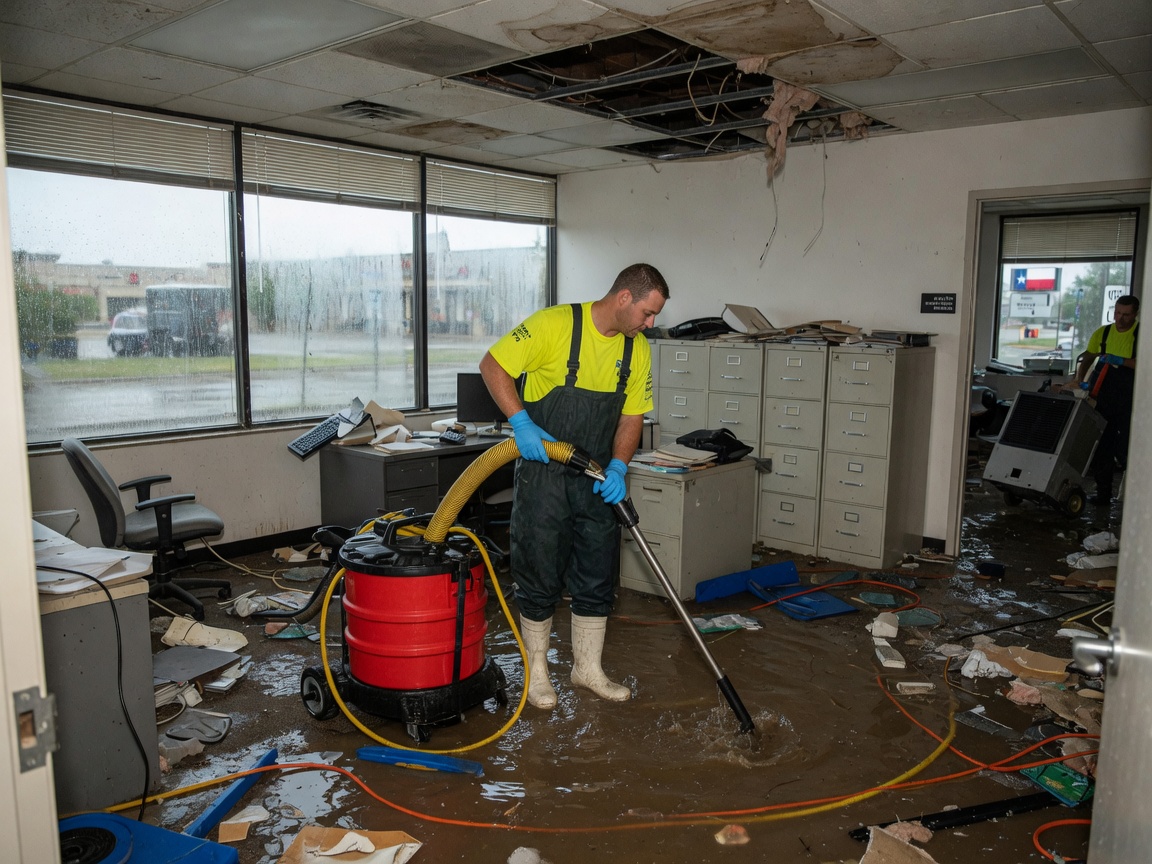
Old Town Carrollton sits in the heart of the historic district with many early 1900s homes on narrow lots along Elm Street and Broadway Street. These older structures often feature crawl spaces and pier-and-beam foundations that trap water after heavy rain. Water Extraction Carrollton Pros operates from 1235 W Trinity Mills Rd and reaches these properties quickly when storms hit Dallas County.
Hot humid summers and occasional severe thunderstorms common to the area push moisture into basements and under older flooring in neighborhoods around Carrollton Square. Our crews know the tight alley access and limited parking that come with serving homes near the A.W. Perry Homestead Museum. We focus on thorough water removal Carrollton jobs that protect both historic woodwork and modern additions.
Mild winters still bring sudden downpours that overwhelm the aging drainage along Fulton Street and College Street. Property owners in Old Town Carrollton call us because we arrive with equipment sized for these compact lots and understand how water moves across the flat terrain near Josey Ranch Lake.
Around Old Town Carrollton
We regularly work near:
- 📍Elm Street
- 📍Broadway Street
- 📍Carrollton Square
- 📍A.W. Perry Homestead Museum
- 📍Fulton Street
- 📍College Street
Water Extraction Carrollton in Old Town Carrollton — Local Notes
- •Older pier-and-beam homes around Elm Street and Broadway Street in Old Town Carrollton frequently have low crawl spaces where water pools after storms, requiring small extraction tools and moisture mapping.
- •Narrow streets and limited driveway access near Carrollton Square mean our trucks stage on side streets like Fulton to reach jobs without blocking traffic in the historic district.
- •Aging storm drains along College Street and around the A.W. Perry Homestead Museum can back up during Dallas County thunderstorms, sending water under porches and into slab edges on older lots.
- •High humidity in summer months keeps moisture trapped in the thick plaster walls common in Old Town Carrollton homes, so extraction work often extends to hidden cavities behind baseboards.